I‘m thinking for example how to do the Heimlich maneuver on others or on yourself, what to do during an earthquake and similar things.
I‘m having lots of fun learning new things with Anki and thought a deck like this would be a good addition. Of course hoping I won‘t ever need to apply any of it.
Stop the bleed, CPR, general first aid via whatever local resource you have (like red cross, but anyone reputable will do).
That’s going to handle any realistic scenario you’ll encounter that wouldn’t need more gear than you can carry in a small toolbox.
Take a modern first aid class. Some of the things taught in recent decades (mouth-to-mouth CPR, tourniquets, heimlich maneuver) are no longer advised for. And as certain tools became readily available for trending problems (NARCAN for opioid overdoses), new trainings are prioritized that someone going through first aid classes a decade-plus ago wouldn’t have learned about.
“Normal” first aid today will teach about scene assessment, AEDs, chest compressions only CPR, and NARCAN. A wilderness first aid class would teach things with the assumption trained medical help is not 30 min or less away (broader scope of scene assessment, tourniquets and splinting bones, hypothermia, animal bites, evacuation, +).
I would say, whatever the emergency, don’t rush to help. You won’t help anyone if you injure yourself. Someone is bleeding ? Find the “knife” first. Car accident ? Put your yellow jacket and secure the area. Someone just fall ? Why ? Is the ground slippery ?
It’s extremely rare when life of a victim is matter of seconds, so take your time to analyze the situation. If you don’t know what to do, just securing the area can prevent something worst to happen.
I think abdominal thrusts AKA Heimlich maneuver is no longer recommended as a first aid for choking, but let me double check
edit: I was mistaken, you should alternate back blows with abdominal thrusts. Detailed info below:
From React First UK
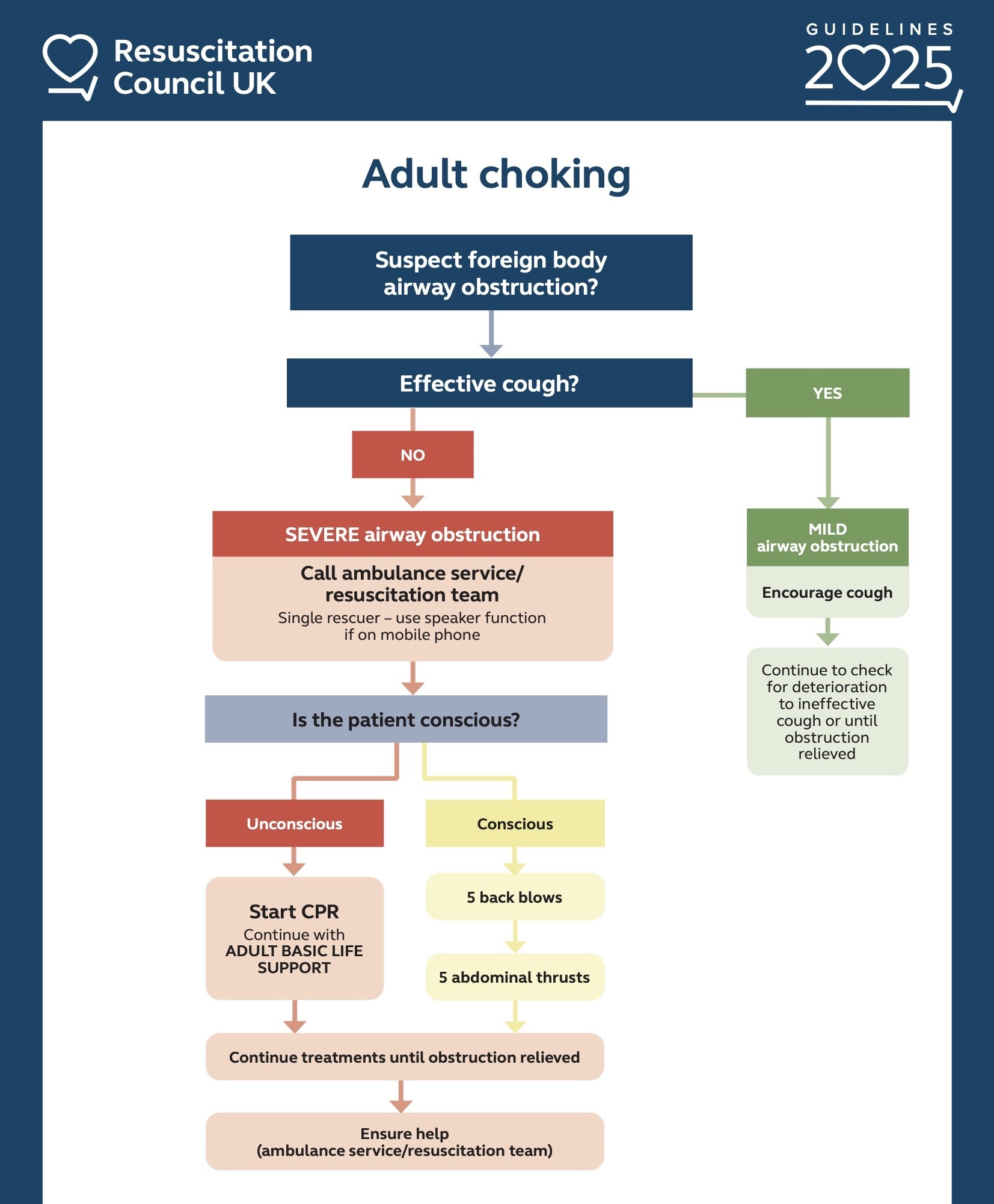
If a person is suddenly unable to speak or cough, particularly if eating. Ask the person: “Are you choking?” Encourage the person to cough.
If the person is unable to cough or the cough becomes ineffective, give up to five back blows. If back blows are ineffective, give up to five abdominal thrusts. If choking has not been relieved after five abdominal thrusts, call 999 and continue alternating five back blows with five abdominal thrusts until choking is relieved, or the person becomes unresponsive.- Do NOT use blind finger sweeps to try and remove a foreign body from the mouth or airway.
- If the person becomes unresponsive, start CPR and ensure [local emergency number] has been called.
- Any person successfully treated for choking with abdominal thrusts or chest compressions should be evaluated by a healthcare practitioner since complications and injuries may occur.
Some of the big ones to me are
CPR/AED use, tourniquet application, burn treatment, how to deal with drunk people and hangovers, recognizing signs of stroke and drug overdose etc.
This doesn’t really relate to flash cards but learn how to make calls to 911/your equivalent emergency number. An emergency should not be the first time you run through making a call like that. If someone drops to the floor right where you are, what is the location you’d give to an operator?
IMO everyone ought to know how to assess scene safety.